
See the bureau before opening every payroll
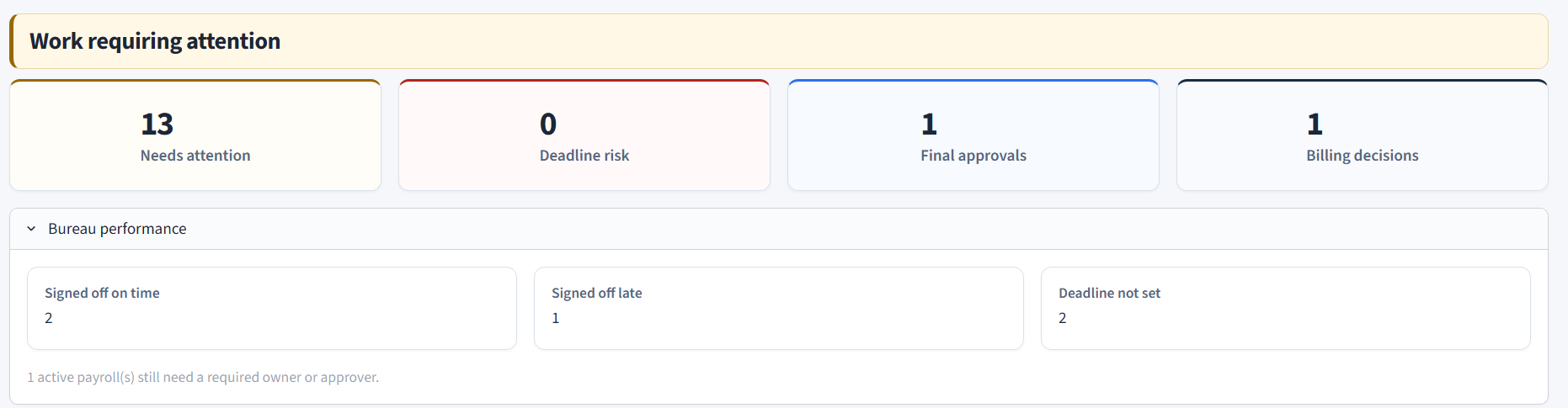
See which client payrolls need attention, which are approaching deadlines and which are waiting for approval.
SecondProof runs the agreed checks across the payroll and brings the exceptions to the reviewer, so your team can spend less time rechecking items that match expectations. It compares what should have happened with what was actually processed and keeps the reason for each decision with the payroll — without replacing the software used to calculate it.
Payroll reports are still useful. SecondProof adds the part that is often left to the reviewer: what this client or employee was expected to receive, what needs a closer look, why an item was accepted, whether a changed payroll only includes expected changes and what needs to be remembered next month.
Known file layouts can be reused instead of mapping the same payroll columns again.
Items that match the agreed expectation can stay out of the way while you focus on what needs attention.
Explanations, evidence and decisions stay together rather than being split across email, notes and spreadsheets.
Check whether the revised payroll contains only the changes you expected, rather than starting the review again.
Choose a stage to see how the review moves from payroll output to investigation, sign-off and the next run.
Once the payroll is ready, SecondProof applies the checks already set for that bureau, client and employee population. Saved mappings reduce repeat setup on returning payrolls.
The review opens with the payroll status and the items that still need attention.
SecondProof is designed for teams handling a higher volume of clients or more complex client-specific checks, where it becomes harder to know which payrolls need attention, keep checking consistent and hand work over clearly.
See which client payrolls need attention, which are approaching deadlines and which are waiting for approval.
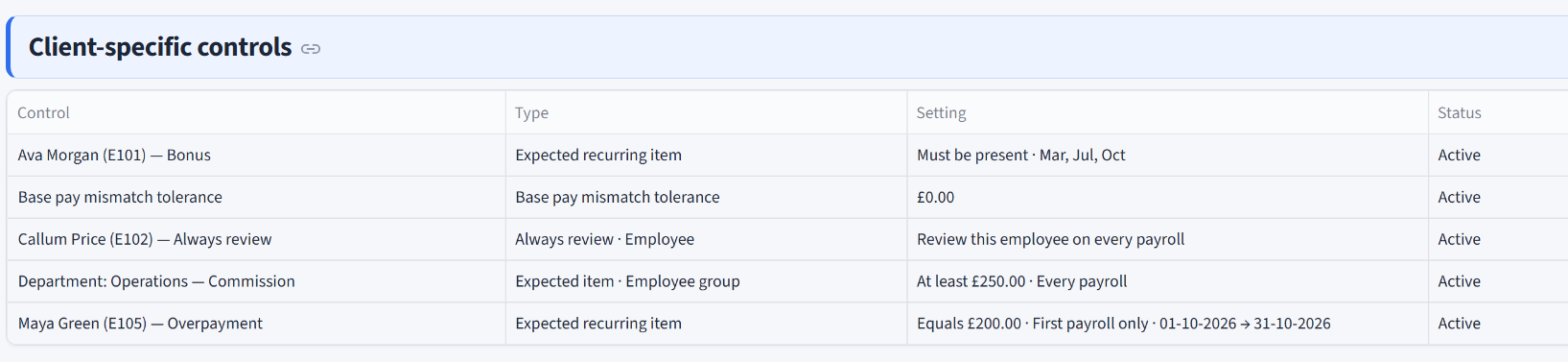
Use common bureau checks while still allowing the things that are different for a particular client, group or employee.
Recurring expectations, explanations and evidence stay available even when work moves between processors or reviewers.
Another reviewer can see what needed attention, what was decided and what still needs to happen without reconstructing the story elsewhere.
SecondProof can hold common bureau checks, client-specific changes and employee or group expectations, then keep relevant future items visible for the payroll they belong to.

SecondProof was created by Alex Healy, Founder, with more than 10 years' payroll experience, including payroll bureau work. It is being built around problems seen first-hand in payroll review: repeated checking, client-specific knowledge, revised payrolls, handovers and sign-off.
SecondProof is preparing for controlled bureau pilots. These are some of the questions we would expect a payroll team to ask before trying a new review system.
Security & dataThose reports can be very useful. SecondProof is designed to do something different: remember what was expected, bring forward the items that need a closer look, record why they were accepted or changed, and keep that history with the payroll for the next reviewer and the next run.
Neither do we. For repeat payrolls, SecondProof is being designed to reuse known file layouts and saved mappings so the normal payroll outputs can move into review with minimal repeat setup. You should not have to map the same columns every month.
Initial demonstrations use fictional payroll data. Real-data pilots will only start once the hosted product, user access, data handling, backups, documentation and independent security checks are ready.
No. Your payroll software still calculates payroll. SecondProof sits alongside it to support the review. Early pilots would also run alongside your existing checks so you can compare the results before relying on it more heavily.
The aim is the opposite: matched items stay out of the way while the reviewer focuses on exceptions that need judgement. During pilots we will measure the actual effect on review time rather than claim a saving before we have the evidence.
No. It is most likely to help bureaux with a higher volume of clients, more complex client-specific checks, or review work that is becoming harder to manage consistently. A very small bureau with simple payrolls and an existing process that already works well may not need it.
A small, stable bureau with straightforward payrolls and an existing checking process that already covers its needs may gain less from SecondProof. The first conversation is there to work that out.
A first conversation starts with how you check payroll today. We can then show the product using realistic fictional payrolls, without asking you to share live employee data.
Send a message directly to Alex if you want to understand the product better before deciding whether a demo would be useful.